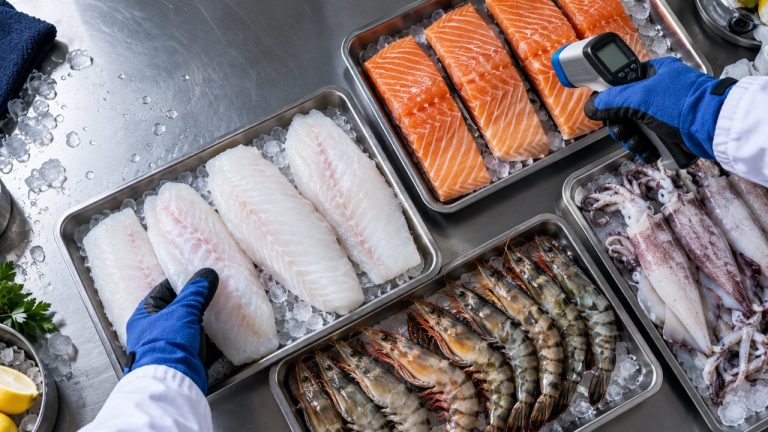
Seafood can be a nutritious part of a balanced diet. Fish and shellfish provide protein, and different varieties contribute nutrients such as omega-3 fatty acids, vitamin B12, iron and zinc. The benefits depend on the species, portion, cooking method and the rest of your diet, so variety and moderation matter.
1. Seafood provides high-quality protein
Protein helps the body build and repair tissues and supports muscles, bones, skin and other normal functions. Fish, prawns, shellfish and other seafood can all contribute to your daily protein intake.
HealthHub Singapore’s My Healthy Plate guidance recommends filling one quarter of a meal with protein foods such as seafood, eggs, lean meat, beans, nuts or tofu. A palm-sized piece of fish or five medium prawns is an example of one protein serving.
2. Oily fish contains omega-3 fats
Oily fish such as salmon, sardines, mackerel and some tuna contain the marine omega-3 fats EPA and DHA. HealthHub identifies fish as a source of beneficial fats that support overall heart health.
For a practical routine, Singapore health guidance suggests choosing fish at least twice a week and varying your protein choices. This does not mean every meal needs to contain seafood. A balanced pattern should also include vegetables, fruit, wholegrains and other protein sources.
3. Different seafood offers different nutrients
Seafood is not nutritionally identical. Oily fish tends to provide more omega-3, while shellfish can contribute nutrients such as iron, zinc and vitamin B12. Exact values vary by species and serving size.
Eating a range of seafood rather than relying on one type can add variety to meals and reduce the chance of excessive exposure to contaminants associated with particular species.
4. Seafood can fit lighter cooking methods
Many types of seafood work well with steaming, grilling, baking, boiling or quick stir-frying. These methods can create flavourful meals without relying on heavy sauces or deep-frying.
Try pairing seafood with vegetables and wholegrains. Use herbs, ginger, garlic, chilli, citrus or a small amount of healthier oil for flavour, and watch the sodium in sauces, marinades and processed seafood products.
How much seafood should you eat?
There is no single portion that suits everyone. My Healthy Plate uses a simple meal guide: half the plate fruit and vegetables, one quarter wholegrains, and one quarter protein foods. HealthHub also recommends including fish at least twice a week as part of a varied diet.
Your needs may differ if you are pregnant, managing a medical condition, following a prescribed diet or have a seafood allergy. Ask a doctor or dietitian for personal advice.
Choose a variety and be aware of heavy metals
Heavy metals occur naturally in the environment and can accumulate in some seafood. SFA advises consumers to avoid excessive seafood consumption and limit predatory fish such as shark, swordfish, bigeye tuna, tilefish and king mackerel, known locally as batang. Consumers, including pregnant women, can continue eating other fish as part of their nutritional intake.
Buying seafood from licensed sources helps ensure it has been sourced, stored and inspected under Singapore’s food-safety system.
Cook and handle seafood safely
- Keep chilled and frozen seafood cold during transport.
- Store raw seafood separately from cooked and ready-to-eat food.
- Wash hands and utensils after handling raw seafood.
- Cook seafood thoroughly, particularly for children, pregnant women, older adults and people with reduced immunity.
- Only eat seafood raw when it is specifically intended for raw consumption.
For purchasing guidance, see how to choose fresh seafood in Singapore. For freezer and thawing advice, read how to store frozen seafood safely.
Frequently asked questions
Which fish are good sources of omega-3?
Oily fish such as salmon, sardines, mackerel and some tuna are common sources of EPA and DHA. Nutrient levels vary by species.
Is seafood always low in calories?
No. The total depends on the species, portion and preparation. Steaming or grilling usually adds less energy than deep-frying or serving seafood with rich sauces.
Is eating fish the same as taking fish-oil supplements?
No. Whole fish supplies protein and other nutrients as well as omega-3. Supplements may interact with medicines and should be discussed with a healthcare professional when appropriate.
Can pregnant women eat seafood?
Seafood can contribute important nutrients, but species choice and food safety matter. Follow current healthcare and SFA guidance, limit higher-mercury predatory fish and avoid raw fish if advised.
Seafood supply for homes and businesses
Pan Ocean Singapore works with food-service, retail and wholesale customers across a range of seafood requirements. Contact our team to discuss supply, processing or cold-chain needs.