Choosing fresh seafood in Singapore is easier when you know what to check. Appearance, texture, smell, temperature and packaging all provide useful clues, but no single sign tells the whole story. Use this practical checklist when buying fish, fillets, prawns or shellfish for your home or business.
Quick seafood buying checklist
- Buy from a licensed, reputable retailer or supplier.
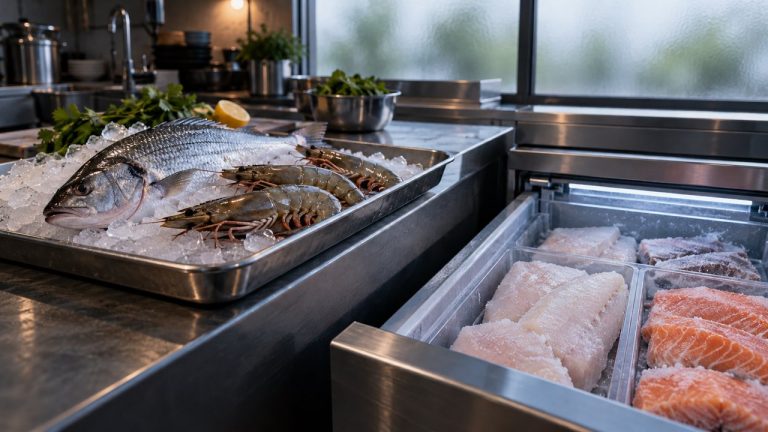
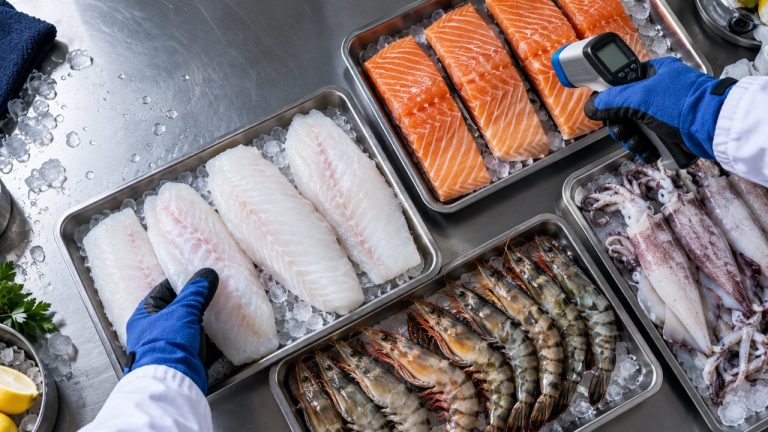
- Choose seafood that is properly chilled, displayed on food-grade ice or kept frozen.
- Look for clean packaging with no tears, leaks or broken seals.
- Check the use-by date and follow the storage instructions on the label.
- Pick up chilled and frozen items near the end of your shopping trip.
- Use an insulated bag and go home promptly.
The Singapore Food Agency (SFA) advises consumers not to buy chilled or frozen food displayed at room temperature. It also recommends checking that packaging is intact and transporting temperature-sensitive food in an insulated bag.
How to check a whole fish
Eyes
The eyes should generally look clear and full rather than cloudy or deeply sunken. However, eye appearance can vary by species and handling method, so use it together with the other checks below.
Skin and scales
Look for skin that appears bright, moist and naturally glossy. Scales should be reasonably secure, and the surface should not look excessively dry or damaged.
Gills
When visible, the gills should look moist and red to pink rather than brown, grey or heavily coated with slime.
Flesh and smell
The flesh should feel firm and spring back after gentle pressure. Fresh seafood usually has a mild sea-like smell. A strong sour, ammonia-like or unpleasant odour is a warning sign.
How to check fish fillets
Good-quality fillets should look moist and firm, with cleanly cut edges. Colour varies naturally between species, so focus on whether it looks characteristic for that fish rather than expecting every fillet to be bright white.
Avoid fillets with excessive gaping, dried or darkened edges, pools of cloudy liquid, or a strong unpleasant smell. If the fillet is pre-packed, check that the seal is intact and the pack is cold.
How to check prawns and other crustaceans
Prawns should feel firm and look moist, not dry or mushy. Their shells should be largely intact. Some natural colour variation is normal, but widespread blackening, an ammonia-like smell or a soft texture may indicate deterioration.
For live crabs or lobsters, look for normal movement and buy from a supplier that maintains suitable holding conditions.
How to check clams, mussels and oysters
Live shellfish should have closed shells, or shells that close when gently tapped. Discard shellfish with cracked shells or those that remain open and unresponsive.
Only eat seafood raw when it is specifically intended for raw consumption and has been handled accordingly. SFA advises consumers to purchase ready-to-eat raw fish from licensed establishments, follow the package instructions and keep it chilled at 0°C to 4°C. Pregnant women, children, older adults and people with reduced immunity should avoid raw fish.
Fresh, chilled or frozen: which should you choose?
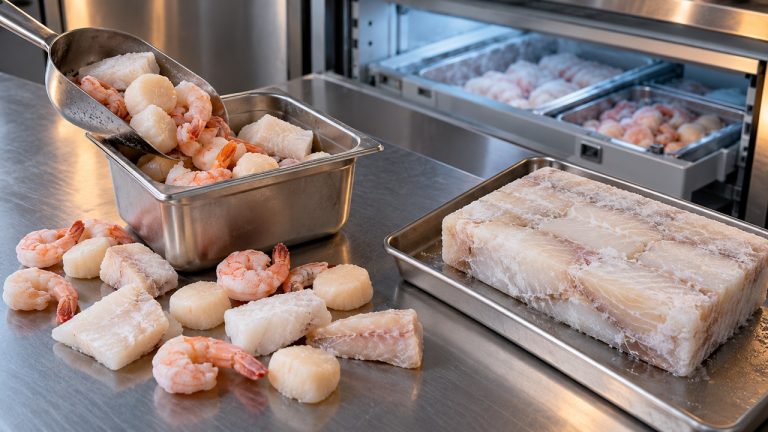
Fresh is not automatically better than frozen. Quality depends on the seafood’s condition, how quickly it was processed and whether the correct temperature was maintained. Properly frozen seafood can retain excellent quality and may be more practical when it will not be cooked immediately.
Choose the format that matches your cooking plan. Buy chilled seafood when you will prepare it soon. Choose frozen seafood when you need a longer storage window, then follow the label instructions and thaw it safely.
Transport and store seafood safely
- Buy chilled or frozen seafood last.
- Place it in an insulated bag, separate from ready-to-eat food.
- Return it to the refrigerator or freezer promptly.
- Keep raw seafood covered and below cooked or ready-to-eat food to prevent drips and cross-contamination.
- When in doubt about safety or freshness, do not eat it.
For detailed freezer temperatures, packaging and thawing methods, read our guide on how to store frozen seafood safely in Singapore.
Frequently asked questions
Should fresh fish smell fishy?
It should have a mild sea-like smell rather than a strong sour, ammonia-like or unpleasant odour. Smell is only one check, so also assess temperature, appearance, texture and packaging.
Is frozen seafood less fresh?
Not necessarily. Seafood frozen promptly and maintained at the correct temperature can offer very good quality. The cold-chain history matters more than the word “fresh” or “frozen” alone.
Can any fresh fish be eaten raw?
No. Only consume fish raw when it is specifically sold as suitable for raw consumption and has been handled under appropriate controls. When unsure, cook it thoroughly.
Buying seafood for your business?
Pan Ocean Singapore supplies seafood and cold-chain solutions for food-service, retail and wholesale customers. Contact our team to discuss product requirements, processing or delivery arrangements.