Frozen seafood stays safe and maintains its quality when the cold chain is protected from purchase to preparation. In Singapore, the practical rule is simple: keep frozen seafood at -18°C or below, minimise time outside the freezer, and thaw only what you plan to cook.
Quick answer: Put frozen seafood into the freezer as soon as possible, keep packages sealed and clearly dated, thaw in a chiller at 0°C to 4°C or use a microwave, and do not leave seafood to thaw at room temperature.
What temperature should frozen seafood be stored at?
The Singapore Food Agency (SFA) recommends keeping freezers at -18°C or below. At this temperature, bacterial growth is greatly slowed and the product remains frozen. Freezing does not remove every bacterium, so safe handling still matters when the seafood is thawed and cooked.
Keep enough space around packages for cold air to circulate. An overfilled freezer can create warmer areas and uneven cooling. Avoid opening the door unnecessarily, and check the freezer temperature regularly rather than relying only on how cold the food feels.
How to protect frozen seafood after purchase or delivery
Temperature control begins before the seafood reaches the freezer. These steps help protect both safety and quality:
- Choose frozen seafood near the end of your shopping trip.
- Use an insulated bag or cooler for transport, especially in Singapore’s warm climate.
- Check that the packaging is sealed, undamaged and free from signs of thawing.
- Move the product into the freezer promptly after purchase or delivery.
- Follow the storage instructions and use-by date printed on the package.
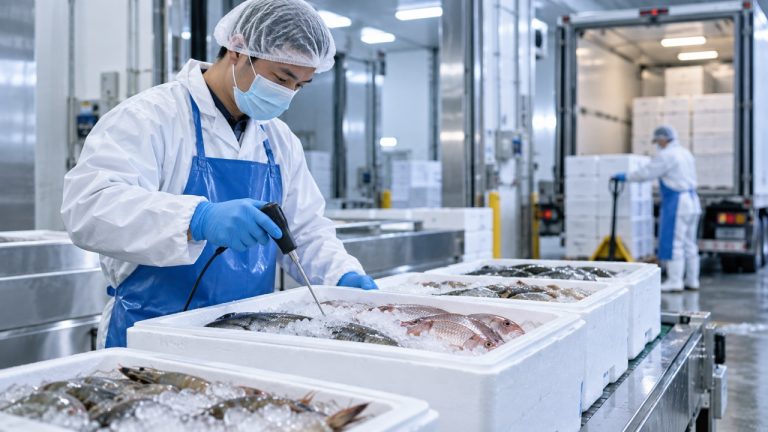
For food businesses, receiving checks are just as important. Confirm that products arrive frozen, packages are intact and the delivery has been kept under appropriate temperature control. If a product arrives partly thawed or with damaged packaging, isolate it and assess it before accepting it into stock.
How should frozen seafood be packed in the freezer?
Keep seafood in its original sealed packaging whenever possible. If a pack has been opened, transfer the remaining seafood into a clean, food-safe and airtight container or freezer bag. Remove excess air, label the pack with the product name and date, and store raw seafood away from cooked or ready-to-eat foods.
Smaller portions are easier to freeze, organise and thaw safely. Portioning also helps you remove only what is needed for one meal instead of repeatedly warming a large pack. Use older stock first and keep a simple first-in, first-out system.
What is the safest way to thaw frozen seafood?
SFA guidance recommends thawing frozen food in a chiller maintained between 0°C and 4°C, or using a microwave. Seafood can also be thawed in ice water when it is sealed in a clean, leak-proof package and the water is changed frequently.
- Plan ahead. Transfer the required portion from the freezer to the chiller.
- Contain drips. Place the package in a clean container on the bottom shelf to prevent raw juices from contacting other food.
- Thaw thoroughly. Check that no ice crystals remain in the centre before cooking.
- Cook promptly. Seafood thawed in a microwave should be cooked immediately.
Do not thaw seafood on a kitchen counter. At room temperature, the outside can warm into the temperature range where bacteria multiply even while the centre remains frozen.
Can thawed seafood be refrozen?
SFA advises consumers and food handlers not to refreeze food after it has been thawed. Repeated thawing and refreezing can encourage bacterial growth when handling is not properly controlled, and it can damage texture and moisture retention.
The best prevention is portion control. Separate larger purchases into meal-sized packs while they are still properly frozen, then return the individual packs to the freezer. Thaw only the amount required for cooking.
How can you recognise loss of quality?
Food can be unsafe even when it looks normal, so appearance alone is not a safety test. However, damaged packaging, excessive ice build-up, dried or discoloured surfaces, and a strong unusual odour after thawing can indicate poor handling or quality loss. When the storage history is uncertain, do not take unnecessary risks.
Choose seafood from an established supplier with reliable sourcing, cold-chain controls and traceability. This is especially important for restaurants, caterers, retailers and other businesses that depend on consistent product quality.
Frozen seafood storage checklist
- Freezer maintained at -18°C or below
- Packaging sealed and clearly labelled
- Raw seafood separated from ready-to-eat food
- Older stock used first
- Only the required portion thawed
- Thawing completed in a chiller, microwave or controlled ice-water method
- Thawed seafood cooked promptly and not refrozen
Frequently asked questions
Is frozen seafood less fresh than chilled seafood?
Not necessarily. Quality depends on the seafood’s condition when frozen, how quickly it was frozen, packaging and whether the cold chain was maintained. Well-handled frozen seafood can offer consistent quality and reduce unnecessary waste.
Can seafood be thawed in hot water?
No. Hot water can warm the outside too quickly while the centre remains frozen. Use a chiller, microwave, or the controlled ice-water method described by SFA.
Should frozen seafood be washed before storage?
Keep commercially packed seafood sealed until it is needed. Follow the product’s preparation instructions after thawing and take care to prevent splashes and cross-contamination.
Choose seafood backed by dependable cold-chain handling
Safe frozen seafood storage starts with a dependable source and continues with disciplined temperature control. Pan Ocean Singapore supplies seafood to customers who value product consistency, responsible handling and reliable service. For more buying guidance, read our guide to choosing fresh seafood in Singapore.