Raw seafood can transfer harmful germs to cooked or ready-to-eat food through hands, drips, boards, knives, containers and work surfaces. Because ready-to-eat food may receive no further cooking, a small handling mistake can bypass the kitchen’s final heat-control step.
For Singapore restaurants, caterers, central kitchens and retailers, preventing seafood cross-contamination requires more than keeping two chopping boards. The whole workflow should keep raw seafood controlled from receiving and storage through thawing, preparation, cooking and service.
Quick answer: how do you prevent seafood cross-contamination?
Use five linked controls:
- Keep raw seafood covered and below cooked or ready-to-eat food.
- Separate raw and cooked preparation by equipment, space or time.
- Wash hands and change gloves between incompatible tasks.
- Clean and sanitise food-contact surfaces and utensils between uses.
- Prevent drips, splashes, packaging and waste from crossing into clean areas.
The Singapore Food Agency (SFA) advises keeping raw meat and seafood away from other food, using separate chopping boards where possible, washing utensils between raw and cooked uses, and storing cooked or ready-to-eat food above raw food.
What is cross-contamination?
SFA’s food-safety guidance describes cross-contamination as harmful bacteria spreading from one food to another, including through hands, equipment and work surfaces.
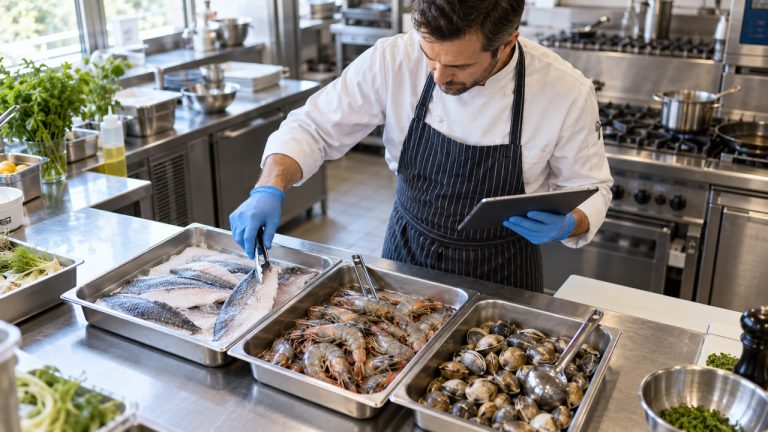
In a seafood kitchen, transfer can happen when:
- raw seafood drips onto food below it
- the same board, knife, tongs or tray is used without effective cleaning
- a food handler touches raw seafood and then handles cooked food
- contaminated packaging is placed on a clean preparation surface
- a cloth spreads raw juices across several stations
- cooked seafood is returned to a plate that previously held it raw
- waste, sinks or thawing containers contaminate nearby work areas
Cooking seafood thoroughly is important, but it does not correct contamination that happens after cooking. The safest workflow prevents raw-to-ready transfer before it occurs.
1. Separate raw seafood during receiving and storage
Cross-contamination control starts before preparation.
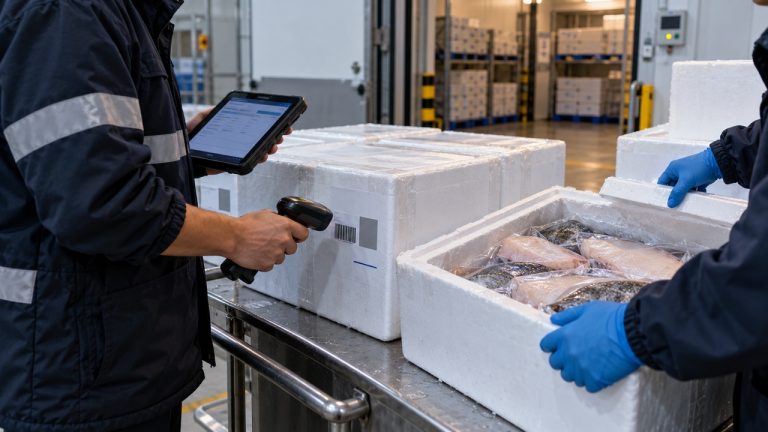
At receiving, check that seafood containers are intact and not leaking. Move chilled or frozen seafood into suitable storage promptly. If an outer carton or bag is wet or damaged, keep it away from clean food-contact surfaces while the product is assessed.
In chillers and freezers:
- keep raw seafood in covered, leak-resistant containers
- store cooked and ready-to-eat food above raw food
- use a tray or container that can contain drips during thawing
- keep products identifiable so raw, cooked and ready-to-eat items are not confused
- separate damaged or uncertain stock from normal inventory
For frozen products, our guide to storing frozen seafood safely in Singapore covers temperature, packaging and thawing controls.
2. Design a one-directional preparation flow
The safest movement is from raw handling to cooking to clean plating, without cooked food travelling back through the raw-preparation zone.
Where space permits, assign different work areas for:
- unpacking and raw seafood preparation
- cooking
- cooked-food portioning and final plating
In a smaller kitchen, separate the work by time. Complete the raw task, remove the seafood and waste, clean and sanitise the station, replace contaminated cloths or gloves, wash hands, and only then begin the cooked or ready-to-eat task.
Do not rely on memory during a busy service. A simple station sequence, visual zoning or written reset checklist gives every employee the same standard.
3. Use separate boards, knives and utensils
SFA advises separate chopping boards and utensils for raw and cooked or ready-to-eat food. Colour coding can make the intended use clear, but colour alone does not make equipment clean.
A practical system should define:
- which board and knife are for raw seafood
- which tools are for cooked or ready-to-eat food
- where clean equipment is stored
- where used equipment is placed before washing
- who checks that the station has been reset
Replace deeply scored, cracked or damaged boards and utensils that cannot be cleaned effectively. Do not place a supposedly clean tool into a container that held used raw-seafood equipment.
Dedicated tongs are especially important at grills, buffets and plating stations. Raw-food tongs should never be used to move cooked seafood onto a serving plate.
4. Control hands, gloves and task changes
Hands can connect every part of the kitchen. SFA guidance instructs food handlers to wash their hands before handling cooked or ready-to-eat food, after handling raw food, after handling waste, after cleaning duties and between tasks.
Build handwashing into the workflow rather than treating it as a reminder:
- finish the raw task
- place used tools in the designated washing area
- remove and discard single-use gloves, if worn
- wash and dry hands properly
- put on new gloves only when the next task requires them
- handle cooked or ready-to-eat food with clean equipment
Gloves are task-specific barriers, not permission to move between raw seafood, phones, money, waste and ready-to-eat food. Change them whenever the task changes or contamination may have occurred.
5. Clean and sanitise between tasks
Cleaning removes food residue and dirt. Sanitising follows the approved method used by the operation to reduce remaining germs on a properly cleaned surface. A visibly wiped surface is not necessarily ready for cooked or ready-to-eat food.
For boards, knives, trays, sinks and preparation surfaces:
- remove seafood pieces and other debris
- wash with detergent and clean water according to the equipment and cleaning procedure
- rinse where the procedure requires it
- apply the approved heat or food-grade sanitising method
- allow equipment to drain or dry in a clean area
- protect clean equipment from raw-food splash and dirty cloths
Follow the sanitiser manufacturer’s instructions for concentration, contact time and food-contact use. Do not mix cleaning chemicals or transfer them into unlabelled food containers.
Use separate cloths for different tasks and zones. A cloth used around a raw-seafood station should not be carried to a clean plating area.
6. Control thawing, drips and packaging
Thaw seafood in a controlled location where liquid cannot drip onto other food. SFA guidance advises placing thawing food on the lowest rack and containing drippings to protect cooked and ready-to-eat food and surfaces.
When opening a carton or inner pack:
- treat the outside packaging as part of the raw zone
- avoid placing it on a clean board or plating bench
- use a clean container to catch liquid
- discard packaging into the correct waste bin promptly
- clean and sanitise any surface contacted by raw juices
- wash hands before moving to another task
Keep the sink area controlled as well. Dirty equipment, thawing containers and food waste can spread contamination through splashes or shared surfaces.
7. Protect cooked seafood through service
Cook seafood thoroughly using the product, recipe and food-safety controls appropriate to the operation. Once cooked, protect it from raw equipment, hands, containers and garnishes prepared in a contaminated area.
Use:
- a clean plate or gastronorm pan for cooked seafood
- clean tongs or serving utensils
- a clean, separated area for portioning and garnish
- covered or protected holding where appropriate
- a defined response if cooked food contacts a raw surface
If contamination is suspected, do not simply wipe the food or return it to service. Follow the operation’s food-safety procedure and escalate the affected batch for assessment.
A seafood station reset checklist
| Check | What good control looks like |
|---|---|
| Raw food removed | Raw seafood is contained or moved to cooking; no exposed raw product remains |
| Waste cleared | Packaging, shells and seafood waste are removed from the station |
| Equipment separated | Used raw boards, knives, trays and tongs are in the designated washing area |
| Surface cleaned | Food residue and raw juices have been removed using the approved method |
| Surface sanitised | The approved sanitising step and contact time have been completed |
| Cloths controlled | Raw-zone cloths are removed or replaced; clean cloths are available |
| Hands washed | The food handler has washed and dried hands before the next task |
| Clean tools ready | Cooked or ready-to-eat food will use clean, dedicated equipment |
Managers can adapt this checklist to the kitchen layout and include it in opening, changeover and closing checks.
Cross-contamination is different from allergen cross-contact
Microbial cross-contamination concerns germs moving from raw food or contaminated surfaces to food that may be eaten without another effective cooking step.
Allergen cross-contact concerns allergenic proteins moving into food that should not contain them. Cooking does not reliably remove an allergen. A kitchen therefore needs both food-hygiene controls and an allergen-control process covering ingredients, recipes, labels, utensils, cleaning and customer communication.
Read our guide to seafood allergens in Singapore food businesses for the separate allergen-management steps.
Frequently asked questions
Can the same chopping board be used for raw and cooked seafood?
Separate boards are the safer and clearer system. If an operation must reuse a board between tasks, it needs an effective documented cleaning and sanitising process before cooked or ready-to-eat food touches it. Replace boards that are too damaged to clean properly.
Does cooking make cross-contaminated ready-to-eat food safe?
Do not assume so. Ready-to-eat food may not receive further cooking, and contamination can happen after the seafood is cooked. Prevent the transfer instead of relying on another heat step.
Are disposable gloves enough to prevent cross-contamination?
No. Gloves become contaminated just as hands do. Use them for the defined task, change them between incompatible tasks and wash hands at the required points.
Should raw seafood be stored above or below cooked food?
Below. Keep raw seafood covered on a lower shelf so drips cannot fall onto cooked or ready-to-eat food.
Is colour-coded equipment compulsory for every kitchen?
The important control is effective separation and correct use. Colour coding is a practical way to make the system visible, but it still requires training, cleaning, sanitising and supervision.
Make separation easy to follow
Cross-contamination prevention is strongest when the kitchen layout, tools and task sequence make the safe action the obvious action.
Start by tracing one seafood item from delivery to service. Identify every hand, surface, container and utensil it touches, then remove any point where raw and cooked workflows cross. For purchasing and product-format questions, contact Pan Ocean Singapore with the seafood type, pack format and operational requirement.